Genetics
Pattern hair loss influenced by inherited follicle sensitivity.
Personalised hair restoration shaped around your features, hair characteristics and long-term goals.
Hair transplantation redistributes healthy follicles from a donor area to areas of thinning or loss. At EVA, every graft is planned for natural direction, density and a hairline that complements your age and facial structure.
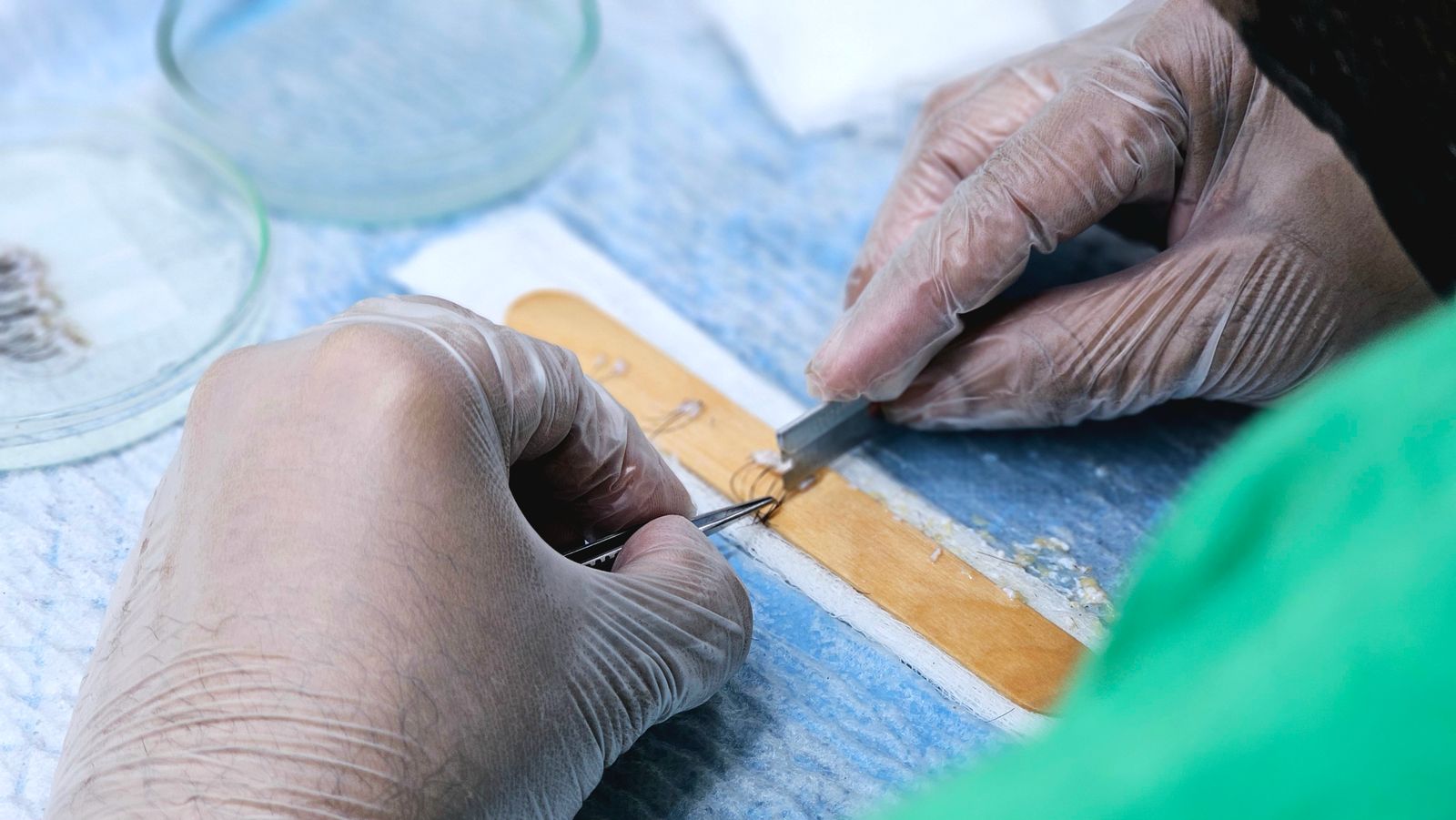
Hair loss may be genetic, hormonal, nutritional, medical or stress-related. A correct diagnosis protects your donor hair and improves long-term planning.
Pattern hair loss influenced by inherited follicle sensitivity.
Thyroid, androgen and life-stage changes can affect growth.
Illness, medication and deficiencies may cause shedding.
Stress, sleep and nutrition influence the hair cycle.
Assessment, tests and hairline design.
Extraction and precise graft placement.
Early aftercare and short recovery.
Progressive growth over the following months.
Mild redness, sensitivity and small crusts can occur early and usually settle gradually. You receive clear washing, sleeping, activity and medication guidance, plus scheduled progress reviews.
Suitability depends on diagnosis, donor density, hair-loss stability, general health and realistic expectations. Younger patients or active hair loss may first benefit from medical management.
A consultation is essential. Hair transplantation is a medical procedure and results vary between individuals.
Transplanted follicles are typically selected from areas more resistant to pattern loss. Existing non-transplanted hair can continue to thin, so long-term planning remains important.
Early shedding can occur. New growth generally emerges gradually over several months, with maturation continuing beyond that. Your clinician will explain a personalised timeline.
All surgical procedures can scar. FUE leaves small dot-like scars, while FUT creates a fine linear scar. Visibility varies with healing and hairstyle.
Local anaesthesia keeps the donor and recipient areas numb during treatment. Mild tenderness afterward is possible and is generally managed with the aftercare recommended by your doctor.
The graft requirement depends on the size of the area, desired density, donor availability and future hair-loss pattern. Your clinician estimates this after a detailed scalp assessment.
Receive a clear diagnosis and a long-term restoration plan tailored to you.